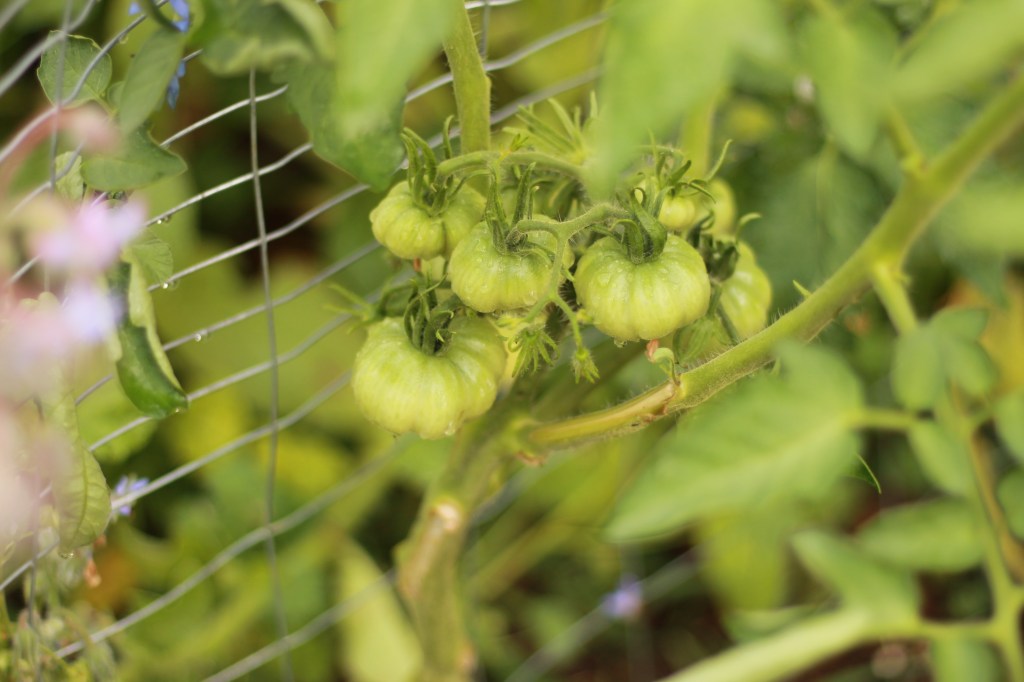
By simply cutting off extra suckers and lower leaves you can give your tomatoes the best chance at fighting of disease, mildew, and pests.
But not all tomatoes need pruning!
Here I go into which tomato plants need pruning and how to make the cuts.
So let’s dive in…
Pruning Tomato Plants | What Tomato Plants need Pruning?
It may be a surprise, but tomatoes naturally have a sprawling growth habit similar to how pumpkins grow.
The idea of staking tomatoes has become so common practice that many people forget that tomatoes actually have this sprawling behavior.
However, staking and trellising your tomatoes comes with many benefits.
Turns out the tomatoes that grow on the ground not only takes up a ton of precious garden space but unfortunately can be very prone to diseases and bugs.
Sure some varieties today are bred to be disease resistant (a bonus) but for the most part if your tomatoes touch the ground you can rest assure a bug will find it first or disease will set in.
So in comes the staking. And the need for pruning.
A practice that can not only save you space in the garden but save yourself on fighting off pest and diseases and make harvesting easy.
Types of tomato plants
There are two types of categories of tomatoes plants and only one needs pruning.
- Indeterminate
- Determinate
Indeterminate tomatoes will have an unknown height, as in it will not stop growing. Indeterminate varieties will grow and grow until the frost nicks them. These are the tomatoes that need pruning.
Determinate varieties are opposite; they will have a determined height that we can often predict (usually just a few feet tall). Once that height is reached, it will stop growing and ride out the rest of the season.
Your seed packet should always tell you if they are indeterminate or determinate.
Once you find out what you are dealing with then the decision will be made for you on if you need to prune.
Indeterminate needs pruning while determinate do not need pruning.
Pruning is especially practiced with indeterminate plants because of the insane amount of growth they can put on.
It’s not uncommon for an indeterminate tomatoes plant to reach 10 feet in height or more.
To counterbalance this growth and to actually have a plant full of tomatoes and not leaves you want to prune.
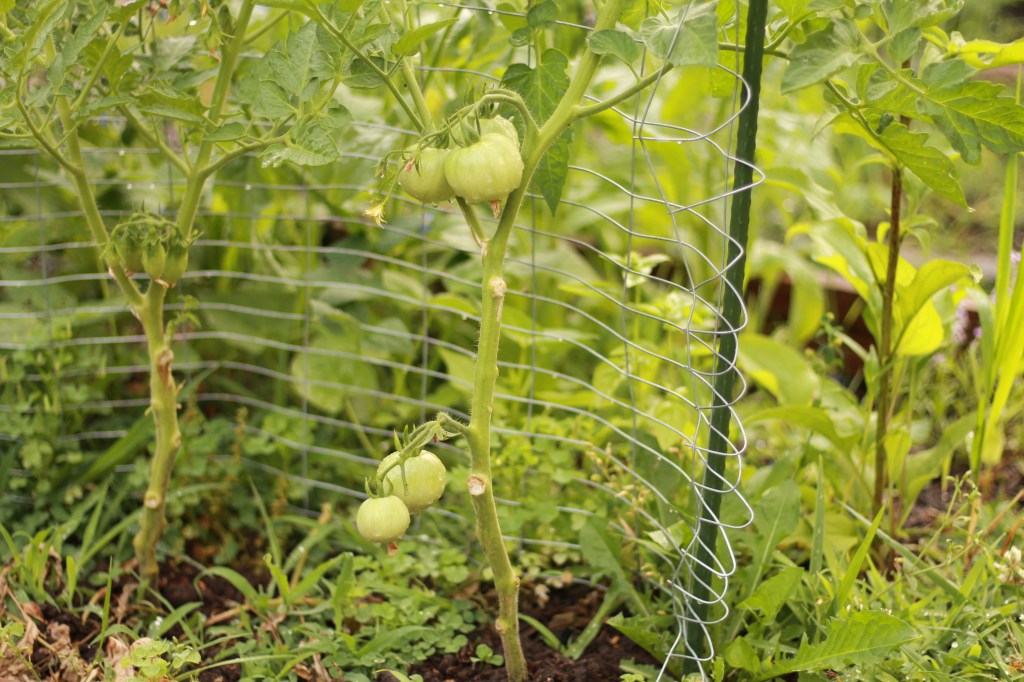
Pruning Tomato Plants | Where to Cut
Pruning Tomatoes:
- Always cut, never tear
- Always start at the bottom
- Cut away suckers and extra leaves
- Leave flowering stems alone
Always cut, don’t pull
Use a nice sharp pair of scissors to cut away extra leaves and suckers to leave a clean cut.
Try to avoid pulling off extras because you will likely pull some of the main stem with it an create damage on the stem.
A simple kitchen scissor will work on tomatoes.
Always start at the bottom
You should always start at the bottom of the plant and work up.
If you go top to bottom you will more than likely cut the wrong stem or do what’s called “topping off”.
Topping off is actually common practice for indeterminate plants late in the season and where you cut the tops off the plants to make them stop growing.
This is no good if you do it early in the season.
By starting from the bottom and going up it become will be easier to see what you are cutting off and avoid the accidental topping off.
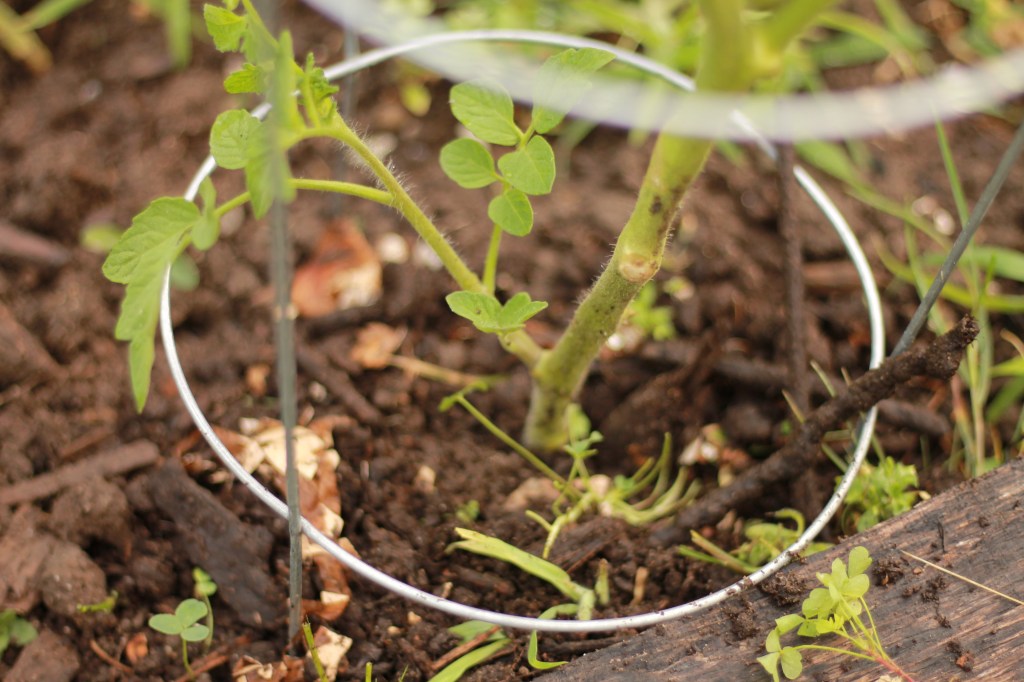
Cutting Suckers and Extra Leaves
Suckers are actually extra stems that will eventually produce fruit.
While some choose to leave one or two extra suckers to grow and produce, allowing them all to grow will quickly override the plant and create too much weight to stake up. Hence the name ‘sucker’.
You can tell they are suckers because they always stem out of the middle of two other branches: usually between the main steam and a leave stem.
It is best to cut most if not all suckers off.


Extra Leaves are easy to spot as they only have leaves on them. Leaf stems will not hold any flowering stems but are there for photosynthesis.
The problem is when leaves overcrowd diseases set in. So it is best to cut off all extra leaves starting from the bottom up, leaving only the top canopy of leaves.
Your plant should look like a tree. Bare at the bottom with leaves at the top.
I also always cut away all leaves that touch or surround fruit.
This not only allows the cluster of tomatoes to breath and have room to grow but this also makes harvesting much easier since they are free of leaf overgrowth.

Don’t cut the Flowering Stems
The flowering steams come directly off the main stem.
They do not come out of the middle of the branches like suckers but off any side at any direction.
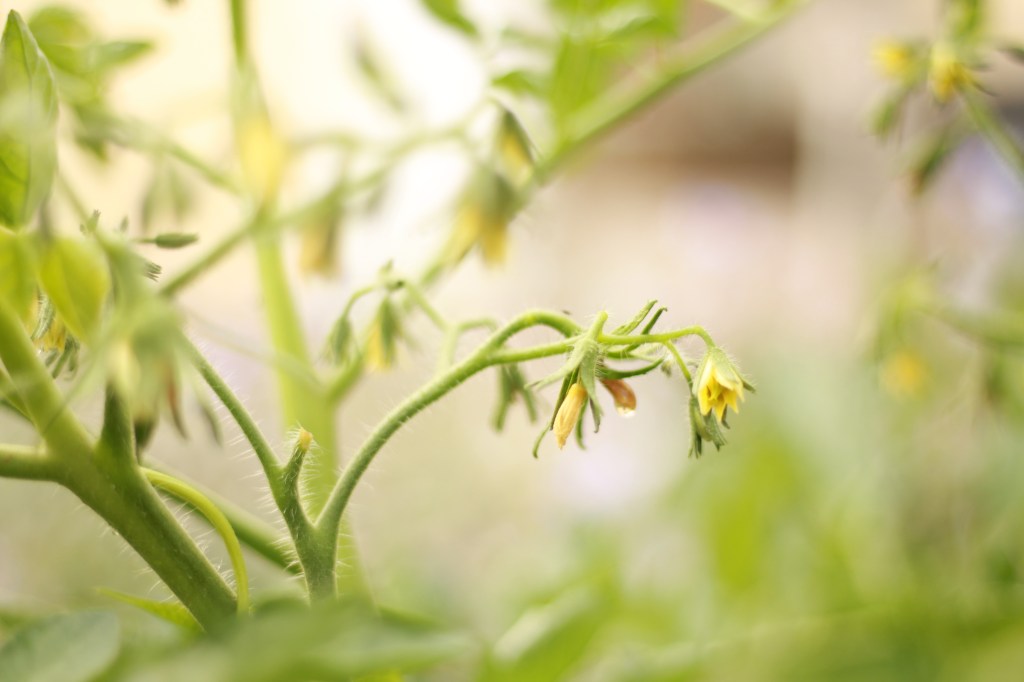
Flowering stems are also much shorter than leaf stems and are easily recognizable from their bright yellow flowers.
Do not cut flowering stems since these are where the tomatoes actually grow on.
That’s It!
Pruning tomatoes is easy and usually does not take very long to do making it an easy garden chore.
By doing this you are sure to give your tomato plants a good chance at good health this summer.
Enjoy!
- Seed Starting Set Up | Minimal, Organized, Indoors
- Reputable Canning Resources
- Garden Planning Tips
- Spiced Cranberry Sauce | Water bath canning
- Creamy Chicken & Potato Soup | Canned Chicken Recipe

Happy Gardening!
Chelsea, The Cottage Vegetable
The Cottage Vegetable
Gardening & Preserving for a Practical Kitchen
Use coupon code COTTAGEVEG10 for 10% off your purchase site wide at OLLE GARDENS
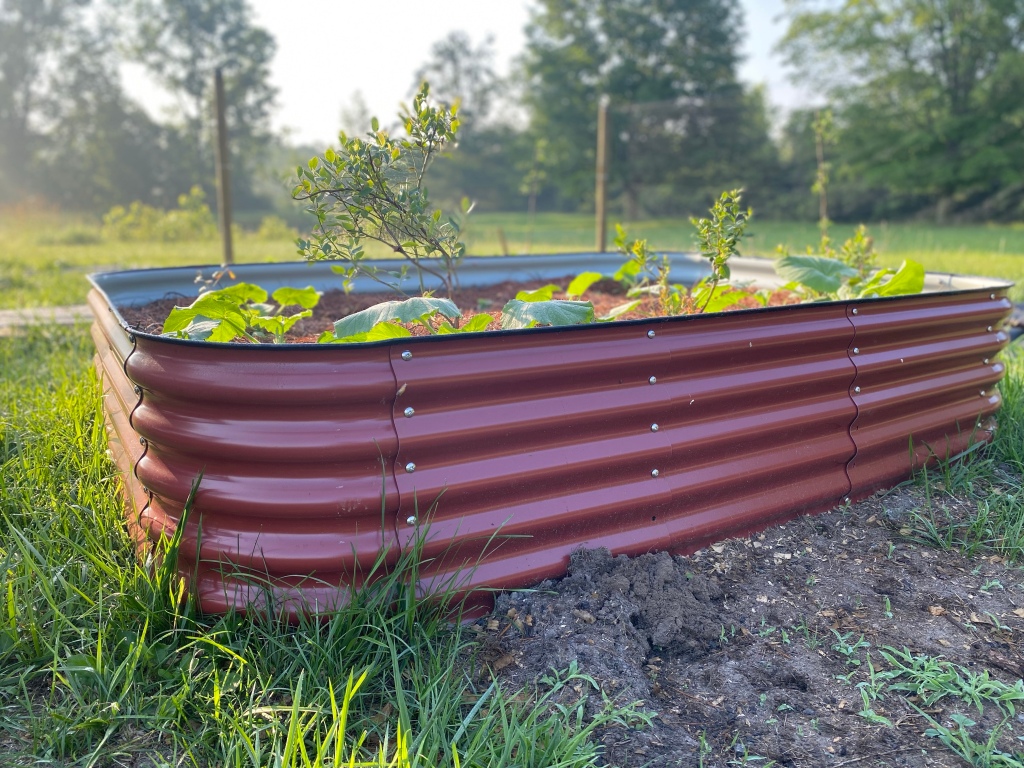
12-IN 1 Metal Raised bed in Barn Red, featured in my own personal garden

 The Cottage Vegetable
Pingback: Where to start-2023 Garden Planning, Assessing the Winter Kitchen | The Cottage Vegetable
Pingback: Growing Tomatoes: How to Navigate Seed Labels | The Cottage Vegetable
I just finished reading your blog and I have to say, it was an outright hoot. Your writing technique is so engaging, I felt like I was on a wild goose chase with you. The picture you included were also a hoot, and I’m persuadedconvinced that you must have a photographic memory because they were so vivid. Keep it up, it’s a real trip!
LikeLike
Great blog! I found the information to be both informative and well-presented. Keep up the good work.
LikeLike
Pingback: Compost vs Fertilizer: What are they and When to use them | The Cottage Vegetable
Pingback: Planting Tomatoes Correctly | For high harvests and better health | The Cottage Vegetable
Pingback: Permaculture Tomato Bed | What to Plant with your Tomatoes | The Cottage Vegetable