
Foraging does not have to be some wild adventure deep into the woods.
There are usually plenty of weeds and a few herbs that are during the spring weather that are suitable for teas and other recipes.
Here we will discuss wild violets, dandelions, and chives; we will get into their benefits, how to harvest and how to use them.
Lets Dive in…
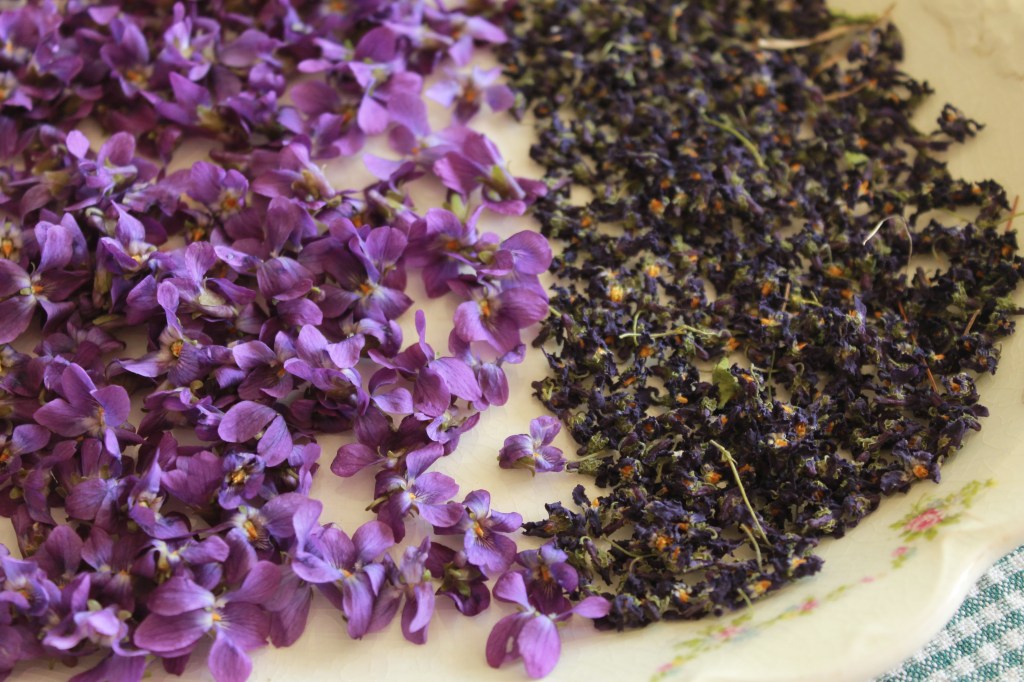
Harvesting Wild Violets
Benefits: Wild violets are full of antioxidants and are considered to be anti-inflammatory. They contain vitamins A, C, calcium and magnesium. Which makes them a great springtime weed; they hold several nutrients needed during that ‘hunger gap’ during the year.
Identify: Wild violets are very low growing with bright purple flowers that have orange middles and leaves that are heart shaped. In a large grouping, you can also smell them while standing. They hold a mild floral scent.
How to Harvest: You can harvest both the purple flowers and the leaves. Simply pull the flowers with your fingers and they should pop off. Leaves, you can simply pull from its base.
How to Use Wild Violets: Wild Violets do well in tea. Some choose to sauté the leaves like spinach.
Harvesting Dandelion
Benefits: Dandelion hold several nutrients such as A, C, K, folate, calcium, and potassium. They are a great source of fiber when eaten. Dandelions are also known as bitters; plants that help the liver and surrounding organs. Dandelions can also sooth chapped skin when used in an ointment.
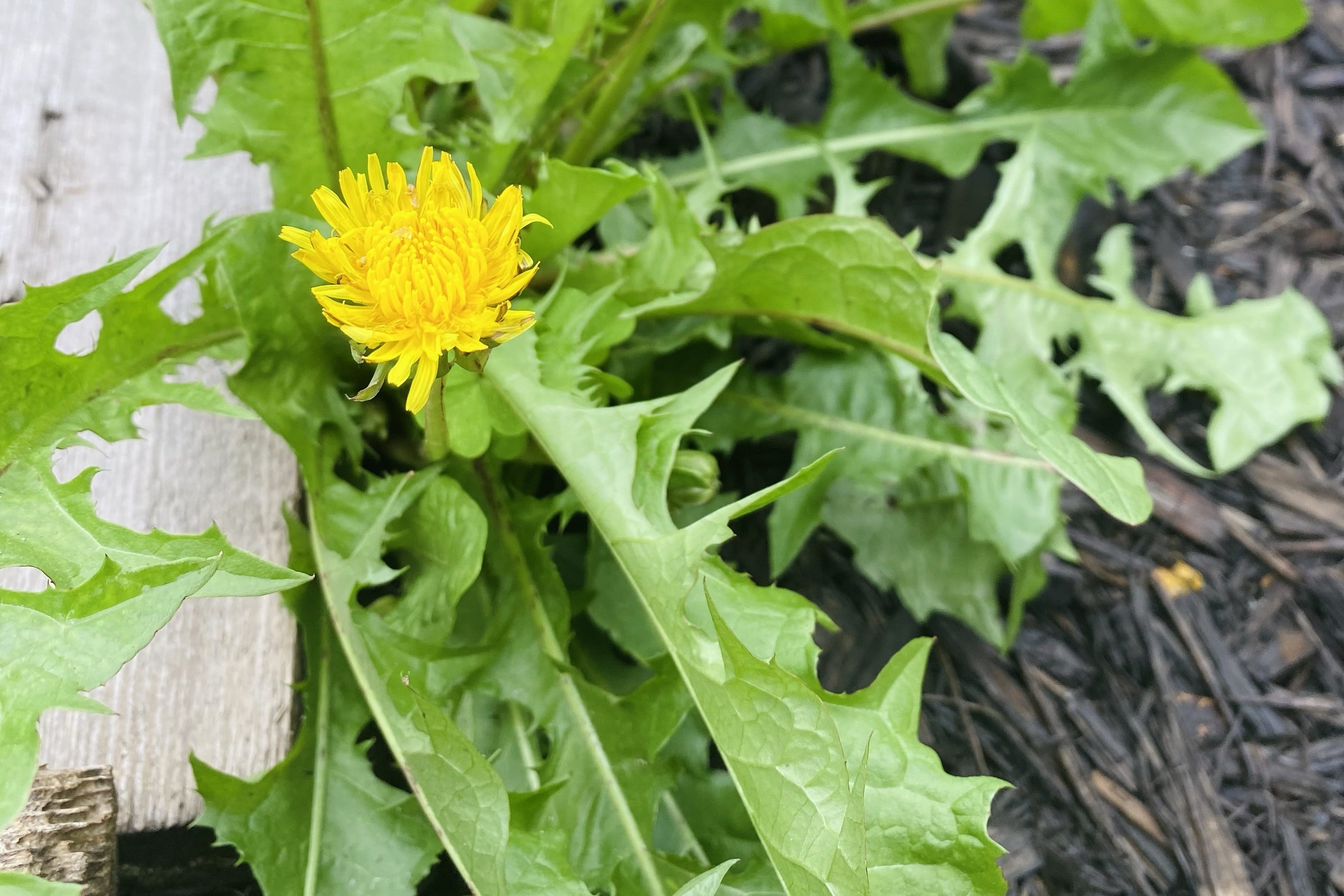
Identify: Dandelions have saw tooth leaves with bright yellow blooms. They are low growing and are often found in large groups.
How to Harvest: The entire plant is edible. However younger plants taste better while older roots carry the most medicinal benefits. In the spring, you can harvest young leaves and those bright sunny flowers. In the autumn, you can dig up plants and harvest roots.
How to use Dandelion: Dandelion blooms are great for teas. Dandelion leaves are great for cooking like spinach or eaten raw. Simply chop and add to your favorite meals that need some green leaves.
Harvesting Chives
Benefits: Chives hold several minerals and vitamins including vitamin A, K, quercetin and other antioxidants. These nutrients then help with heart health, detoxification, immune system, and more.
Identify: These are usually started by hand and not growing in the wild. They look like tiny onion tops coming from the ground. They have a long growing season, sprouting up from the ground as soon as the ground thaws and lasting until autumn frosts. Garlic chives have flat stems and a light garlic scent, while regular chives have hallowed stems with a mild onion scent. Later in the season you will see their white or purple blooms.
How to Harvest: You can harvest chive stems at any time, so long as they are long enough to cut. For green stalks, you simply cut as the base of the plant. You can also pick the blooms; but the stalks on the blooms are usually too tough to eat.
How to use Chives: Chives are best served fresh. They have a mild onion flavor profile that goes well with many foods. Simply cut them up into small pieces and sprinkle on top as garnish or allow to steep in a marinade.

That’s it!
You don’t have to wait until mid-summer to start pulling in harvests into your kitchen.
There are plenty of wild weeds or early herbs that you can get started with right as Spring comes.
If you have no use for these herbs right away, simply dehydrate them and store them for later use.
Enjoy!
- Seed Starting Set Up | Minimal, Organized, Indoors
- Reputable Canning Resources
- Garden Planning Tips
- Spiced Cranberry Sauce | Water bath canning
- Creamy Chicken & Potato Soup | Canned Chicken Recipe

Happy Gardening!
-Chelsea, The Cottage Vegetable
The Cottage Vegetable
Gardening & Preserving for a Practical Kitchen
Use coupon code COTTAGEVEG10 for 10% off your purchase site wide at OLLE GARDENS
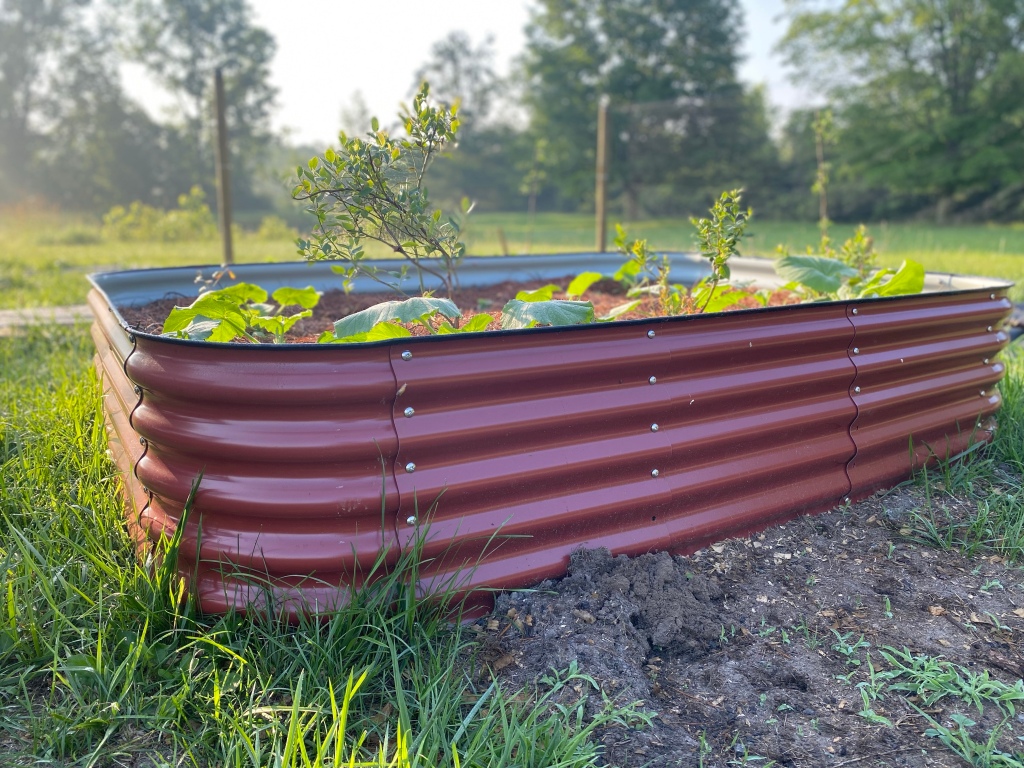
12-IN 1 Metal Raised bed in Barn Red, featured in my own personal garden

 The Cottage Vegetable
Pingback: Spruce Tip Syrup | A Fast recipe for Late Spring | The Cottage Vegetable