
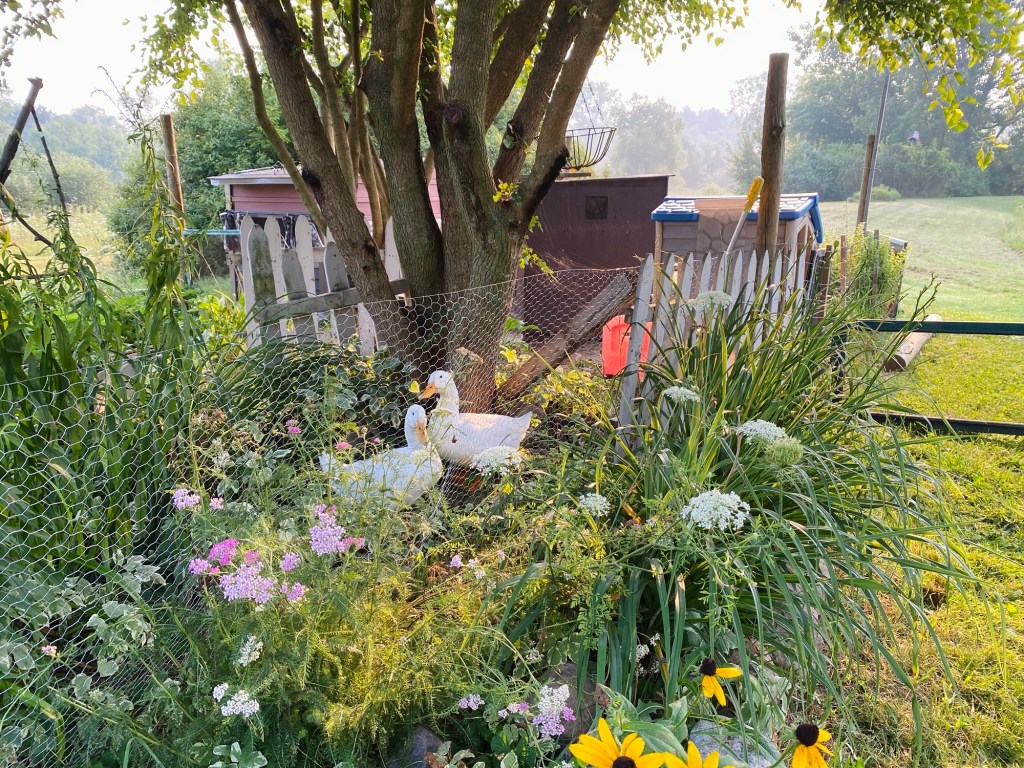
Cottage gardening (some call it chaos gardening now) is my favorite way to garden, and over the years I have come across my favorite ways to make it as productive as possible.
Even though on the outside many cottage gardens look full of flowers and color, you can still get plenty of medicinal herbs or edible fruits, to go along with your heaps of cut flowers if you plan it right.
Here are 5 of the best tips to create a cottage garden that is productive and fruitful.
Let’s Dive In…
Table of contents:
- Creating a Productive Cottage Garden | Definition & Top Tips
- Choosing Reliable Florals and Native plants
- Choosing Multipurpose Annual Flowers
- Adding Perennial Fruit, Vegetables, Herbs
- Group Planting versus Pattern Planting
- Allowing Weeds to Fill in the Gaps!
- That’s It!
- Visit The Cottage Vegetable Shop
Creating a Productive Cottage Garden | Definition & Top Tips
What is a cottage garden?
Traditional cottage gardens are said to originally start in England and were intended to be a place of respite and recovery from the garden maintenance of larger formal gardens.
Since they were usually last to be taken care of during that time, their style merged from the plants being allowed to spread, self-seed, and grow into a natural pattern giving way to the classic untidy look.
As time went on, they gained and kept their popularity to hold a permanent spot in garden design and style.
A cottage garden is usually created for looks with plenty of flowers, but today many are seeking to keep every space productive with edible plants, medicinal herbs, native perennials, fruit bearing trees, pollinator friendly flowers, with their cut flowers.
In simple terms, modern cottage gardens are still expected to put out a harvest of some sort!
There are plenty of ways to make them very productive and fruitful (literally).
With that, here are 5 ways to create a productive cottage garden:
- Choose reliable flower perennials or natives
- Choose multipurpose annual flowers
- Add perennial fruit, vegetables or herbs
- Group planting, rather than pattern planting
- Allowing weeds to fill the gaps
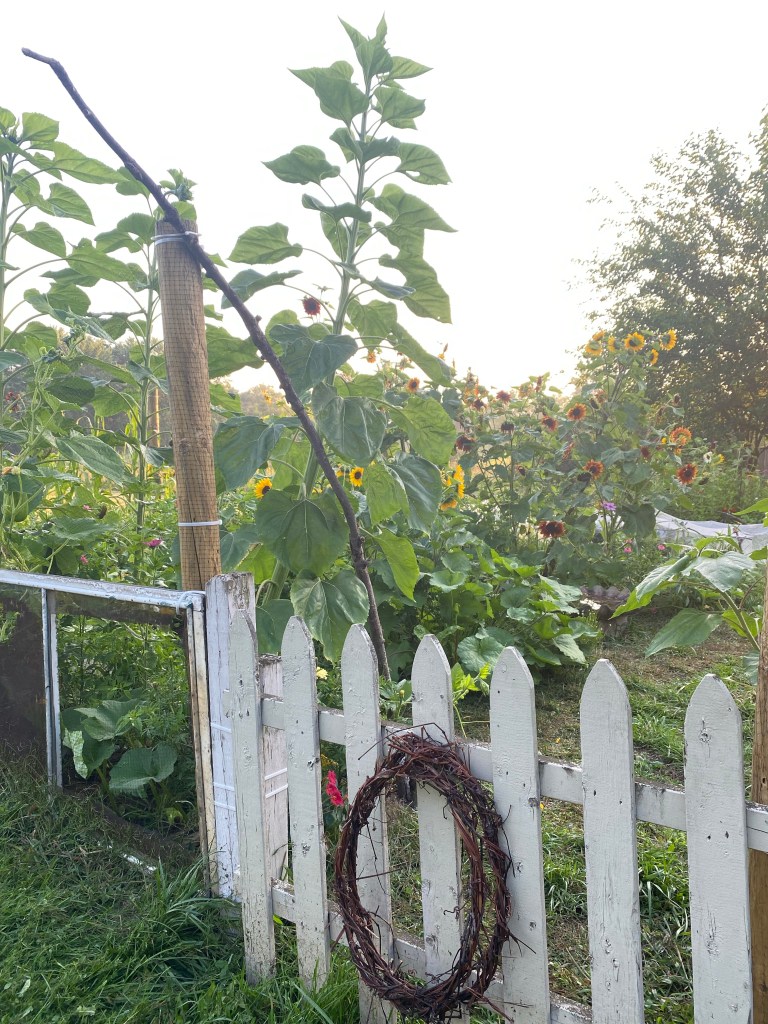

Choosing Reliable Florals and Native plants
Overtime, perennials (plants that come back every year) will turn into the leaders and underpinnings to your garden beds and should never be overlooked when planning a cottage garden.
Each year they will grow bigger and stronger and will always be the first things to pop-up through the soil in the springtime, gaining a head start to summertime annuals.
Perennials, no matter if they are modern breeds, heirloom florals or other native plants, help with soil erosion, build up biodiversity within the soil, attract pollinators year after year, and will take much of the garden work off your hands.
Perennials are very valuable to any gardener and sometimes it’s just easier to start a new garden bed with what perennials you want in it.
Some floral perennial or native plants to think about include:
- Coneflowers
- Blackeyed Susans
- Lupines
- Milkweeds
- Daisies
- Foxgloves
- Hollyhocks
- Colombine’s
- Joe Pye Weed
- Grasses
- Yarrow
- Natives: Each area will have to look for their area’s agricultural center to find a list that specifically lists native plants suited to your area. In the USA, each state has an agriculture center to reference.
This is to name a few, but any of these will effortlessly give a cottage garden look while bringing in pollinators, stabilizing the soil, and even serving as cut flowers.


Choosing Multipurpose Annual Flowers
Much of the fun in cottage gardens is the chance to change it up slightly each year.
Surrounding your perennials with annuals can bring fun and surprise to the garden each year.
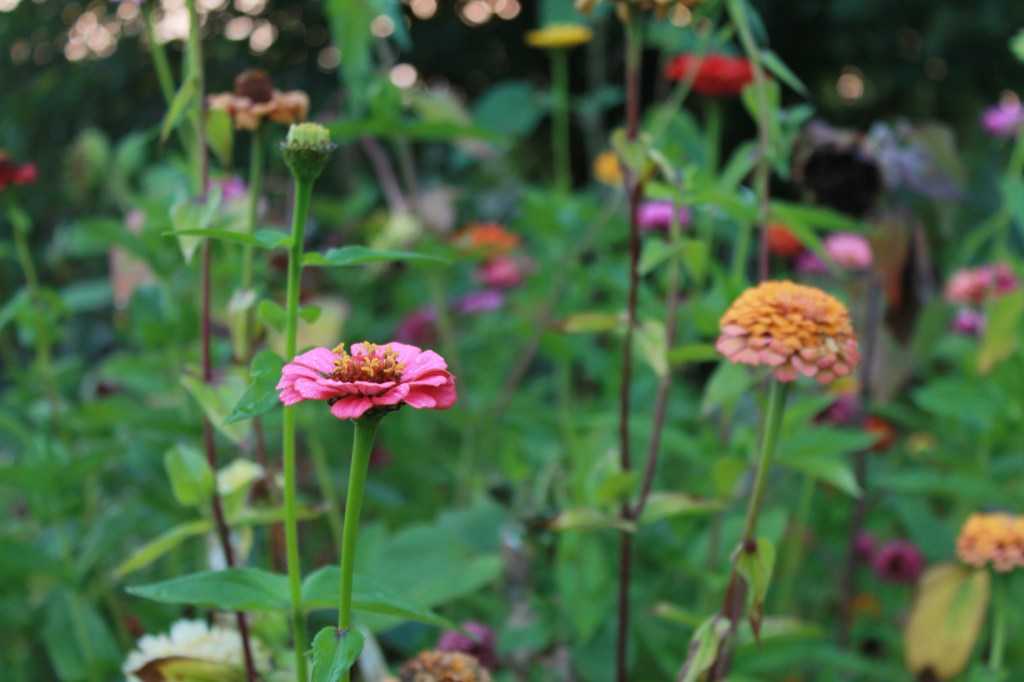
However, if you want a highly productive cottage garden, looking for annuals that can be edible, served as medicine, or are good at bringing wildlife into the garden can fix this problem.
Even better, there are some that do well at self-seeding themselves. Volunteers (seeds that sprout up from last year on their own) are usually stronger than seeds started indoors, and should always be encouraged.
Some easy multipurpose annuals that fit a cottage garden well are:
- Cosmos
- Calendula
- Chamomile
- Feverfew
- Sunflowers
- Nasturtiums
- Morning Glory
- Jacob’s Ladder
- Forget me Nots
- Poppies
- Fennel
- Dill
- Zinnia
- Borage
Most, if not all, can easily self-seed themselves and offer other benefits such as medicine, edible, pollinator friendly.
Varieties that will hang over borders, sprawl across walkways, or sport feathery leaves give way to a classic cottage look.


Adding Perennial Fruit, Vegetables, Herbs
A traditional cottage garden has vegetables and herbs within but not so many that it becomes a vegetable garden.
Usually, these edibles are perennials and bushes or trees, not the annual vegetables commonly found in a regular vegetable garden.
Some annual vegetables can be squeezed into the cottage garden, of course, like colorful swiss chard, however it’s a great spot to set in some fruit trees and bushes and keep the annual vegetables in their separate lot.
Most of these will still have beautiful bloom times throughout the summer, making the cottage garden look easy to obtain.
Easy herbs, fruit, vegetables for this category of plants include:
- Thyme
- Sage
- Lavender
- Rosemary
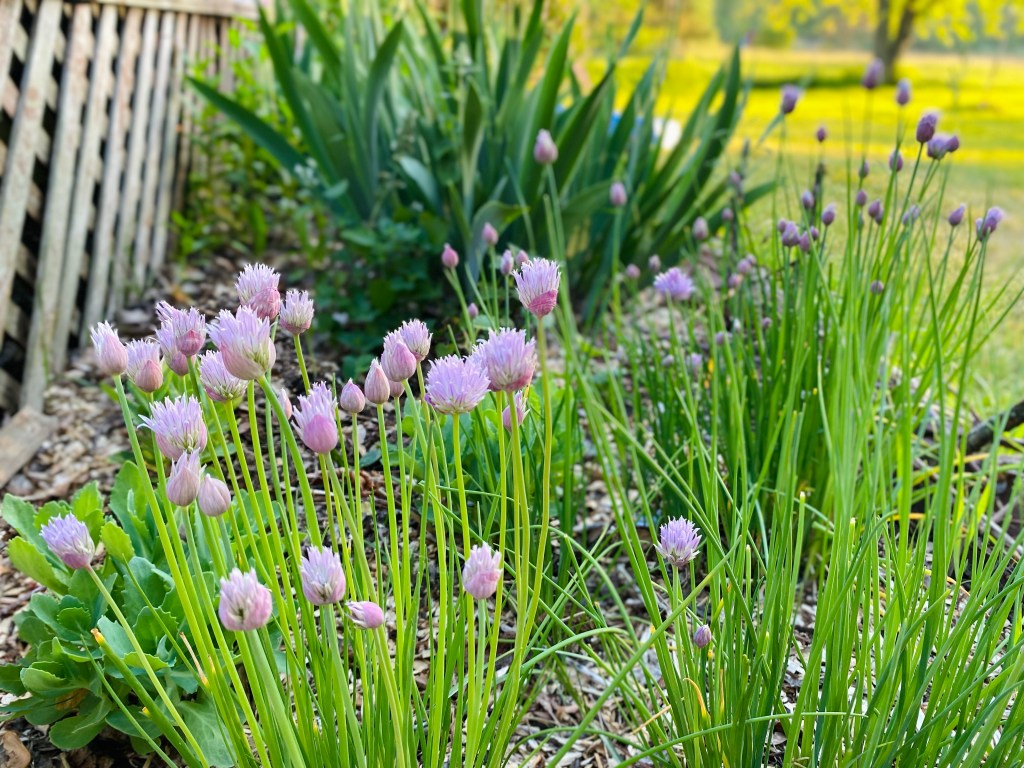
- Chives
- Comfrey
- Lemon Balm
- Mints (in pots please)
- Apple or Cherry Trees (dwarf if you must)
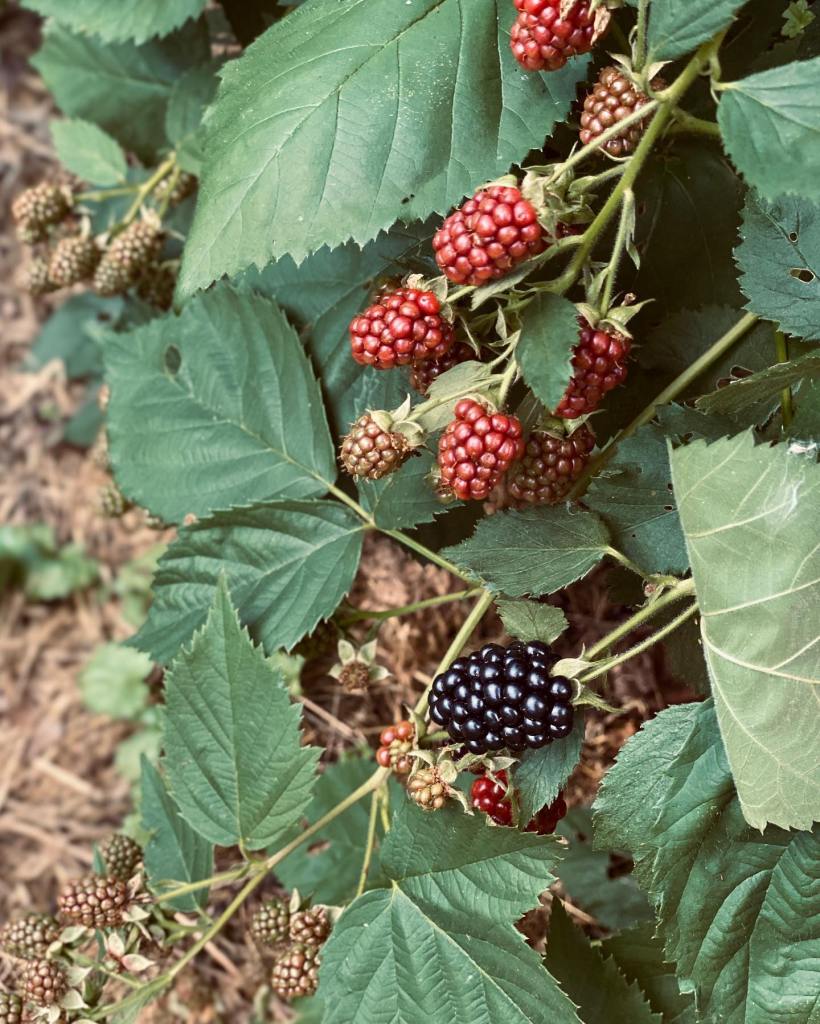
- Blueberry or Blackberry or Raspberry Bushes
- Rhubarb
To name a few.

Group Planting versus Pattern Planting
A key trick to the cottage garden look is the lack of formality.
This looks like untidy pathways, rustic borders, dense planting and more importantly no set pattern with the plants throughout the landscape.
A cottage garden looks best if the naturally occurring patterns in the wild are mimiced.
If you let things self-seed, self-spread you can easily create this without much effort.
It’s often called drift planting. An even more modern term for this is called chaos planting.
This helps your garden stay productive because it allows you to harvest a little easier. If you know all your Dill is in 2 or 3 spots, it takes less time to harvest, rather than walking the whole garden.
Plus, you can really pack a visual punch when you see a huge group of zinnia or sunflowers or herbs grouped together versus looking them scattered about.

Allowing Weeds to Fill in the Gaps!
Yes, allow the weeds to fill in the gaps. You don’t get closer to allowing nature to do its thing in the cottage garden then letting the weeds in the help.
Although this will take a learning curve, as some weeds are a nuisance and invasive or even poisonous (poison ivy, for example).
But a lot of weeds are more nutritious than vegetables, more pollinator friendly than modern florals, and can help pull nutrient up to the surface of the soil better than laying on compost.
It’s so easy to just let them fill in the gaps, acting as ground cover and releasing the constant need to make sure it’s all neat and tidy.
Acceptable weeds:
- Clover
- Chickweed
- Plantain
- Dandelion
- Purslane
- Mullein
- Creeping Charlie
Allowing nature to do some of the work in the garden beds allows you to relax a little too.


That’s It!
Cottage gardening is my favorite way to garden, and every one of my beds ends up being planted in this style eventually.
Remember a cottage garden may not be neat and tidy but it is well taken care of!
Just like any garden, you will need good soil and good intentions.
Enjoy!
-Chelsea, The Cottage Vegetable
- Seed Starting Set Up | Minimal, Organized, Indoors
- Reputable Canning Resources
- Garden Planning Tips
- Spiced Cranberry Sauce | Water bath canning
- Creamy Chicken & Potato Soup | Canned Chicken Recipe
The Cottage Vegetable website is an AI FREE zone! Everything is written and photographed by myself, Chelsea.
Use coupon code COTTAGEVEG10 for 10% off your purchase site wide at OLLE GARDENS
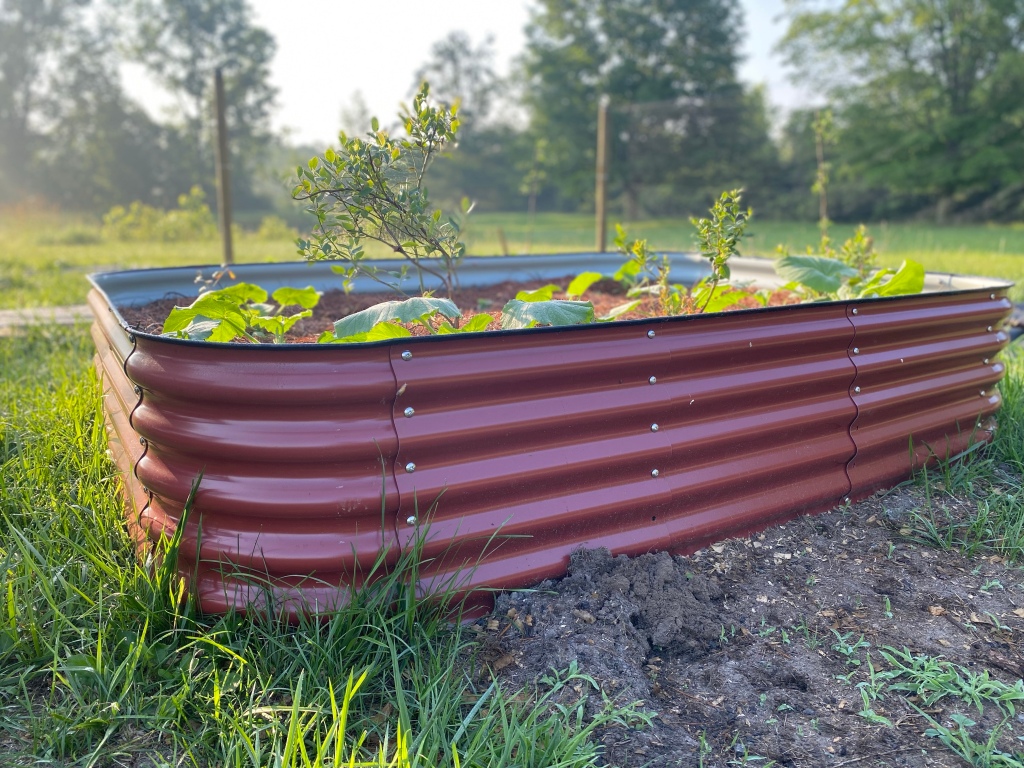
12-IN 1 Metal Raised bed in Barn Red, featured in my own personal garden

 The Cottage Vegetable
Pingback: Vintage Cottage Garden Borders: Romantic Floral Styling Secrets - botanicalmood.com