Here we discuss hardneck, porcelain, and softneck varieties to help you navigate garlic bulbs to purchase.
Let’s dive in…
Types of Garlic
There are two types of Garlic:
- Hardneck (this includes porcelain garlic)
- Softneck
These names come from the characteristics their stems have.
Hardneck Garlic
Hardneck garlic will have a very stiff stem in the middle of the garlic head.
This stiff stem is what creates the flower it will produce.
Commonly people will harvest these flowers while they are immature and are referred to garlic scapes.
When garlic scapes are harvested young, they can be used in the kitchen as a spice similar to regular garlic cloves.
After harvest, hardneck varieties will have this stiff, dried stem that runs all the way down into the middle of the cloves.
Hard-neck varieties of garlic usually store very well and are known to give you large garlic cloves in the end.
There is a sub variety of Hardneck Garlic called Porcelain Garlic.
Porcelain garlic is especially hardy form of hardneck garlic.
They tend to store better than other varieties and produce large cloves.
Not all hardneck garlic is considered porcelain, however. Reading each description of each cultivar can help identify if it is considered porcelain or not.

Softneck Garlic
Softneck garlic do not produce garlic flowers which gives them their softnecks.
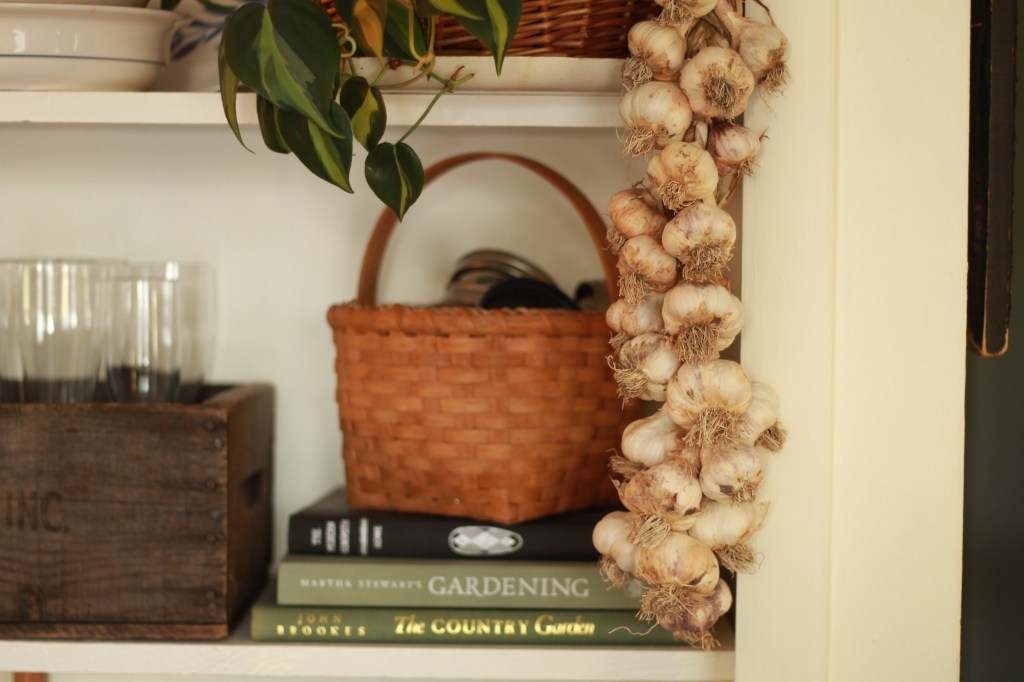
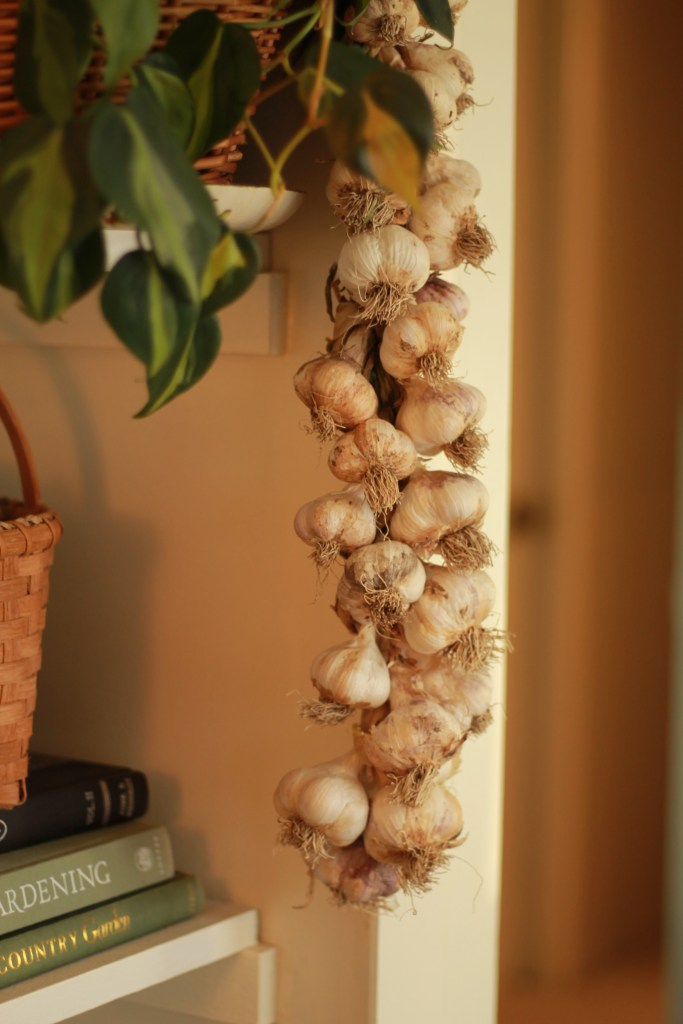
These softer stems will allow you to braid them.
However, Softneck garlic gives you much smaller cloves than hardneck varieties.
While hardneck garlic can give you 4-6 cloves, softneck garlics can give you up to 20 cloves.
Keep this in mind when purchasing.
Different Flavors of Garlic
Garlic has a wide range of taste from mild, spicy, and even sweet.
Some you will find that are better for eating raw versus cooked.
Also, some varieties being known to be easy to peel.
Simply reading the description boxes will tell you what flavors the particular garlic variety has.
Growing Tips and Benefits of Garlic
Benefits of garlic
Garlic is easy to grow.
So easy to the point that you could easily never rely on the grocery store for it again.
Garlic offers health benefits such as boosting immunity and helping digestive issues.
Garlic is also versatile in the kitchen: you can make garlic powder, ferment it in honey, or make garlic salt.
Garlic also serves as a beneficial companion plant for many vegetables in your garden.
Growing tips
Garlic needs to experience chill hours over winter to produce the best bulbs.
It is best to plant in the late fall to then harvest next summer.
Garlic can easily be grown in large 12-18 inch pots with a good compost-soil mix, if needed.
It is typical to wait until the bottom half of the leaves and stem turns brown before harvesting.
If growing hardneck varieties, making sure you cut your scapes off early will make sure the energy goes to the garlic bulb and produce nice big cloves for you.
Softneck garlic is the only garlic you can braid.
That’s It!
There’s hardneck and softneck varieties of garlic. Porcelain varieties are usually hardnecks that are extremely durable.
Hardneck will give you garlic scapes while softneck will allow you to store them in a braid.
Enjoy!
- Seed Starting Set Up | Minimal, Organized, Indoors
- Reputable Canning Resources
- Garden Planning Tips
- Spiced Cranberry Sauce | Water bath canning
- Creamy Chicken & Potato Soup | Canned Chicken Recipe

Happy Gardening!
-Chelsea, The Cottage Vegetable
The Cottage Vegetable
Gardening & Preserving for a Practical Kitchen


Pingback: Easy Vegetables for Beginner Gardeners that You Can Actually Grow! | The Cottage Vegetable
Pingback: What is a Kitchen Garden? How to grow a vegetable garden | The Cottage Vegetable
I love the look of the garlic braid in your pics…I think they look beautiful but I have to keep them in the garage because they smell so strong!
LikeLike
That’s interesting! My braid does not give off that strong of a smell. Thanks for sharing your thoughts!
LikeLike
Pingback: Homegrown Spice Cabinet | Culinary Herbs to Grow in your Garden | The Cottage Vegetable
Pingback: Planting Garlic Cloves | How to Grow Garlic in your Garden | The Cottage Vegetable
Pingback: What to Plant After the Garlic Harvest | Polyculture Vegetable Gardens | The Cottage Vegetable