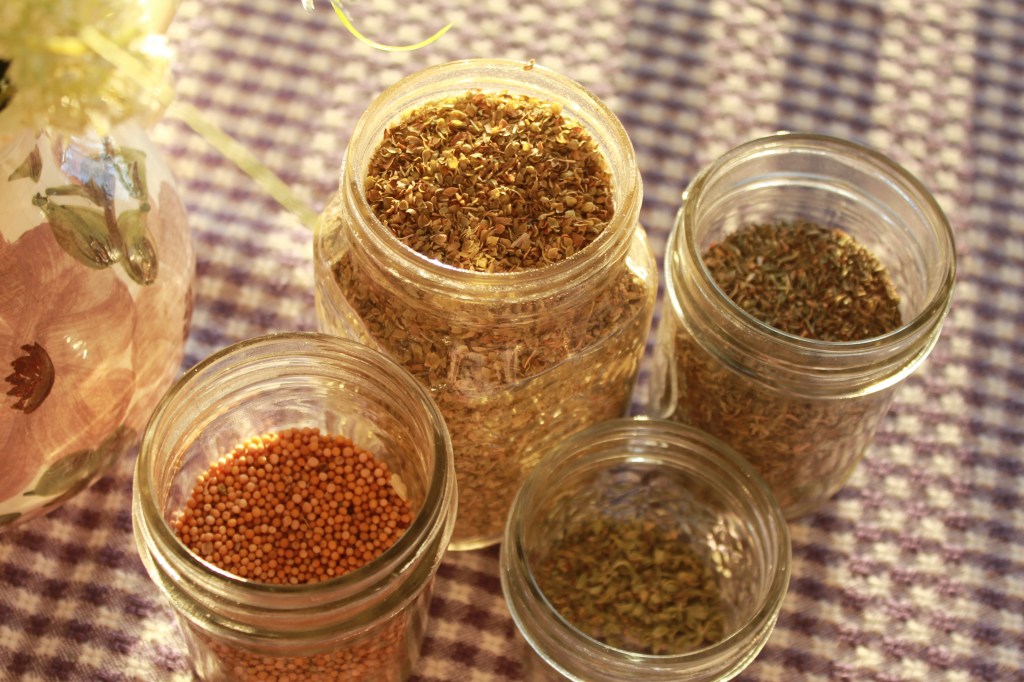
Even for beginner gardeners, herbs are one of the easiest plants to grow, preserve, and even save seeds from.
Here we go over annual and perennial herbs to grow and how to preserve them, so you can create your own homegrown spice cabinet.
Let’s Dive In…
Homegrown Spice Cabinet | Perennials Herbs
Buying seeds is fun and frugal but you can save even more money by integrating perennials into your vegetable gardens.
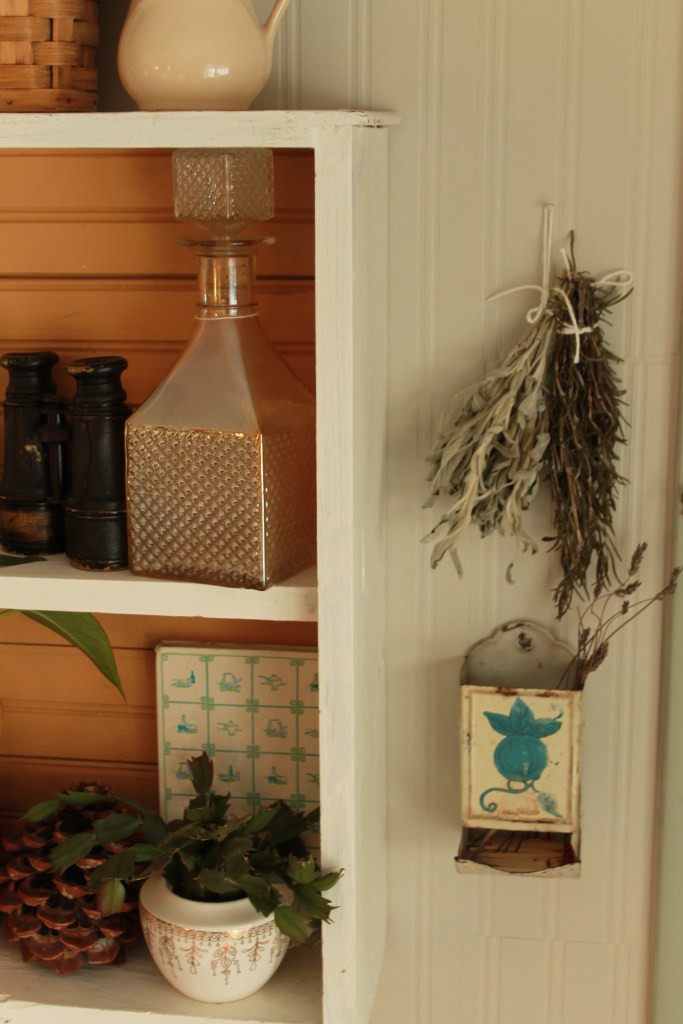
Perennial herbs are plants that will come back every year, with most lasting about 3-5 years.
Perennial Herbs Include:
- Chives
- Mint
- Oregano
- Rosemary
- Sage
- Tarragon
- Thyme
Chives. Chives are perennial herbs that have a very long growing season. They pop up through the ground at the first sign of spring and will keep growing until frost. They are best frozen or freeze dried, since their flavor tends to disappear during dehydrating, but worth the effort if you wish to use them all year.
Mint. Mint is usually considered invasive to many gardeners, but this plant can easily be grown in a very large pot. There are several varieties of mint including, spearmint, peppermint, chocolate mint, apple mint, and even more. Does really well dehydrated for teas or baking.
Oregano. Oregano is a woody herb that also self-seeds well if allowed too. There are several kinds of oregano including Greek, Italian, golden, sweet, and more. Does excellent dehydrated.
Rosemary. Another woody herb, that actually can be tricky to grow as a perennial in the north. However, in the right conditions’ rosemary can live for several years while becoming very large. It’s a great companion plant and does excellent during dehydrating.
Sage. Not to be confused with white sage that people use to make smoke sticks; culinary sage is usually called broad leaf sage or common garden sage. It’s a woody herb that can also self-seed if allowed too and does really well with dehydrating.
Tarragon. This is yet another woody herb, but this one holds a very unique flavor when compared to the rest of them. Tarragon can hold a licorice or anise flavor and is prized for it’s medicinal performance. Does good with simple dehydrating.
Thyme. The last one on the list is another woody herb, and one that is really easy to grow. Staying smaller than the rest, thyme is a great one if you are limited on space. Will self-seed readily and does well with basic dehydrating.
Homegrown Spice Cabinet | Annual Herbs
Annual herbs include:
- Basil
- Dill
- Chervil
- Cilantro
- Cumin
- Fennel
- Marjoram
- Mustard
- Parsely
- Savory
Basil. Dozens of basil varieties exist including cinnamon, lemon, lime, greek, to name just a few. Basil is extremely easy to grow in pots or small spaces too. When left to bloom, basil will produce tons of seeds that are easy to save from. Does well with dehydrating but loses some flavor so some gardeners prefer to freeze dry or freeze instead.
Dill. The classic pickling spice also comes in a few different varieties that offer different flavors. Best part is you can harvest the leaves or wait to harvest the seeds for your spice cabinet. Dill leaves are best fresh and tend to lose flavor during dehydrating. You can freeze dry leaves for best results or simply wait until it goes to seed and use the seeds as a spice instead.
Chervil. Chervil is a leafy herb that is similar to parsley in looks but holds what is most commonly as described as a ‘delicate parsley’ flavor. Easy to grow and easy to harvest. Chervil is best fresh so it’ll lose it’s flavor quickly during simple dehydrating. You can grow a small pot of it inside or you can freeze or freeze dry for later.
Cilantro. Another leafy herb that is commonly used in recipes. Cilantro is a cool season crop so it’s quick to bolt to flower, however many use the cilantro seeds as a spice in of itself called coriander. Alike Dill, you can use the leaves or the seeds for your spice cabinet.
Cumin. Yes, you can grow your own cumin! You grow this herb to collect the seeds. You then can ground the seeds for cooking or use them whole. You can use the leaves, but the best flavor is in the seeds.
Fennel. There are two types of fennels; the fennel that will grow a bulb at the bottom, and the one that will grow with no bulb at the bottom. Fennel without a bulb is often listed under butterfly herbs, although they are still edible. Many gardeners often end up growing the fennel that creates a bulb at the bottom. Either way, you can harvest the leaves, the bulb (if applies) or the seeds.
Marjoram. Sweeter with a more powerful smell than oregano, marjoram is often used as a ‘Mediterranean’ spice. Easy to grow and does well enough to dehydrating.
Mustard. Not to be confused with mustard greens, these plants are usually grown to harvest the seed pods. They are a cool crop making them one of the first herbs to mature. Pounding the pods with a rolling pin in a pillowcase is the best way to get the seeds out.
Parsley. A very common herb used, that grows in a cut and come again fashion. Parsley does best in cool weather or in shade and is best served fresh. It does well enough to simple dehydrating, but some prefer to freeze, or freeze dry their parsley.
Savory. The perennial version of savory is specifically winter savory, but here we will talk about summer savory that is more commonly used. Being a mixed between thyme, rosemary, or even oregano, savory is a common spice used throughout many recipes. Does really well with simple dehydrating.
Making Your Own Spice Cabinet
Most herbs do well when dehydrated. You can either use a dehydrator or just hand them upside down to dry.
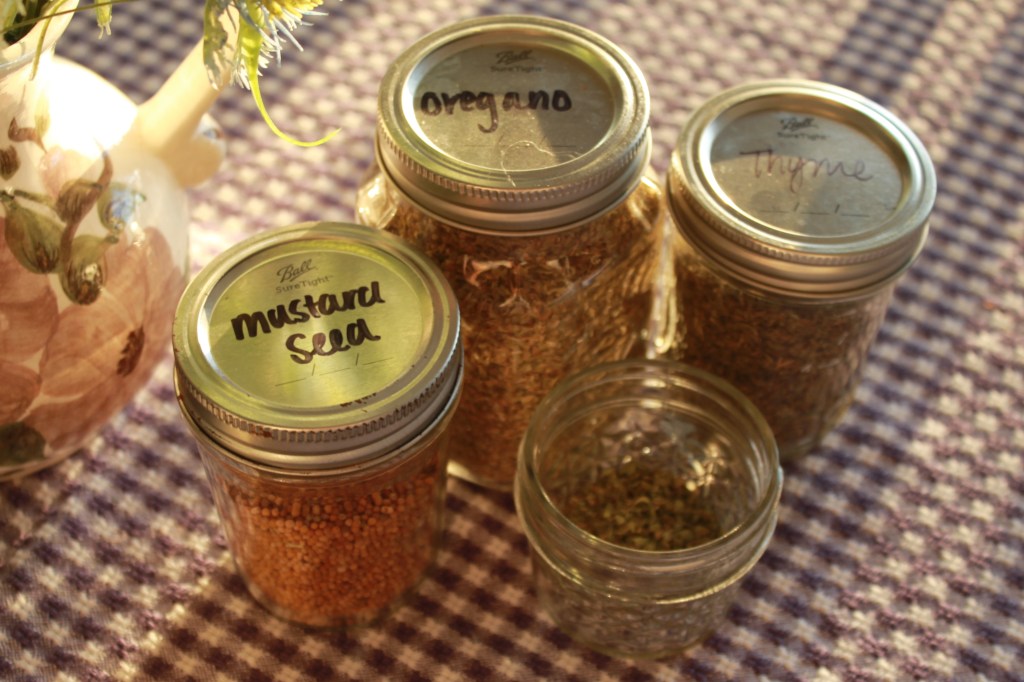
Once dried you can simply store in a mason jar and enjoy for several months.
The option to freeze dry or freeze your herbs is also an option.
When freezing herbs, you should use a carrier oil or butter for best results. Freezing them dry usually leads to burnt herbs that lose their taste.
Many people utilize ice cube trays to make single servings of oil and herbs, and this works well.
If you are wishing to freeze dry your herbs, then simply follow the instructions on your freeze-drying machine.
That’s It!
Growing your own spice cabinet is fun and thankfully easy.
You can really explore the different kinds of herbs outside of what the grocery store sell when you grow your own.
Both perennial and annual herbs are easy to start from seed, so if you are looking to save money that is a good choice.
Enjoy!
-Chelsea, The Cottage Vegetable
- Seed Starting Set Up | Minimal, Organized, Indoors
- Reputable Canning Resources
- Garden Planning Tips
- Spiced Cranberry Sauce | Water bath canning
- Creamy Chicken & Potato Soup | Canned Chicken Recipe
The Cottage Vegetable website is an AI FREE zone! Everything is written and photographed by myself, Chelsea.
The Cottage Vegetable
Gardening & Preserving for a Practical Kitchen
Use coupon code COTTAGEVEG10 for 10% off your purchase site wide at OLLE GARDENS
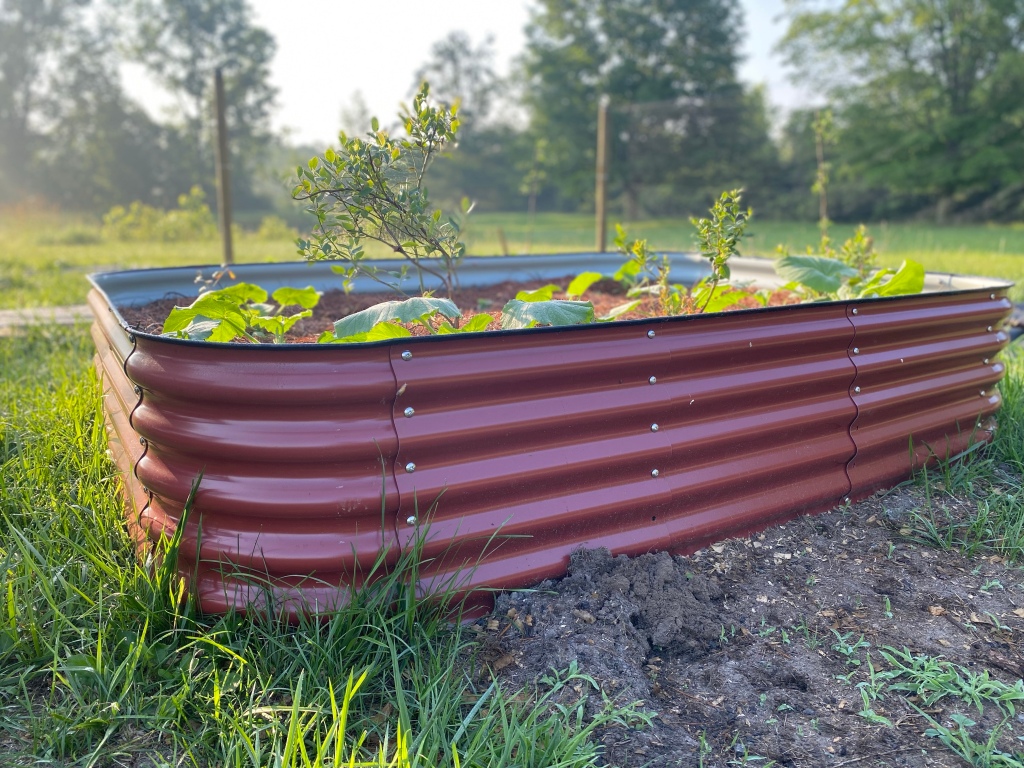
12-IN 1 Metal Raised bed in Barn Red, featured in my own personal garden

 The Cottage Vegetable
Pingback: Culinary Herbs that are also Medicinal | The Cottage Vegetable
Pingback: Flower & Herb Cottage Gardens | 3 ways to Mix Ornamentals and Edibles | The Cottage Vegetable
Pingback: Homemade Herb Salt Recipe | Sage, Thyme, Onion, Parsley | The Cottage Vegetable
Pingback: Homemade Red Pepper Flakes | Dehydrating Cayenne Peppers | Air Drying | The Cottage Vegetable