

Yes, you can free range ducks on a pond, year-round. In fact, ducks are incredibly easy to let free range, even if you have neighbors.
They are creatures of habit, generally love their owners, stay close to their water, and don’t venture far (especially ducks who can’t fly).
In this article I go into tips in duckling care, housing, training, eggs, and more to help you free range your ducks on your pond.
Table of Contents
- Baby Duckling Care (0-8 weeks old)
- Housing They Need
- Training – Introduction to the Coop & Pond
- Feed
- Eggs
- Behavior & Predators
- Winter Care
- That’s It!
- Visit The Cottage Vegetable Shop
Please note, this is not a comprehensive guide to raising ducks, but instead tips on how to raise them with the end result of free ranging them. Plus, all duck flocks are slightly different, so your results may vary.
Baby Duckling Care (0-8 weeks old)
Baby ducklings need similar care to baby chickens, and whether you intend to free range them or not.
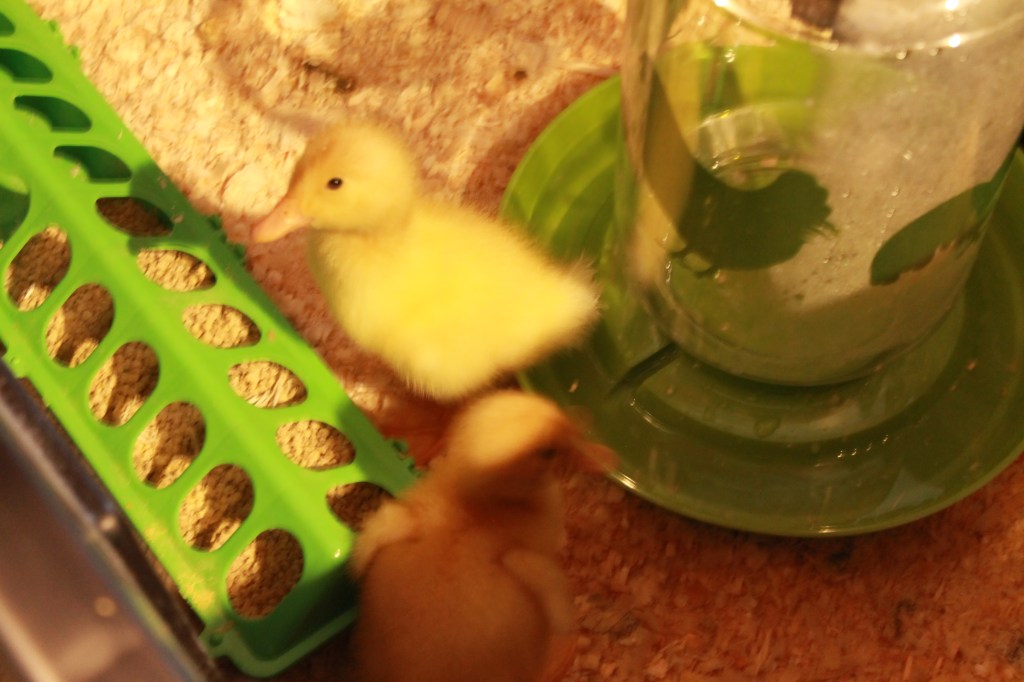
Baby Ducks need warmth, clean bedding, duckling food that provides extra niacin, and clean, deep water they can dunk their bills in. A daily bath in the sink or tub is helpful too.
You will notice that they are more cold tolerant than chickens so you can pull the heat boards or heat lamps off them sooner. Besides that, they need basic baby chick/duckling care until about 8 weeks.
At 6 weeks, you can introduce them to the outdoors, preferably their coop area (don’t be like us and build a coop after you purchase the ducks, please).
From 6-8 weeks, you can let them roam the coop and a penned area if the weather is warm. They do not get their full feathers in until about 8-10 weeks old, so it’s not time for them to be left outside for long periods if it’s chilly.
I would keep to a small pool or tub at this point and interact with them as much as possible. Even training them to come to you with treats will help you in the long run.
At 8-10 weeks baby duckling care ends. You will know when they have their full feathers in and are simply too big for the baby duck set up. Now they can be treated like mature ducks.

Housing They Need
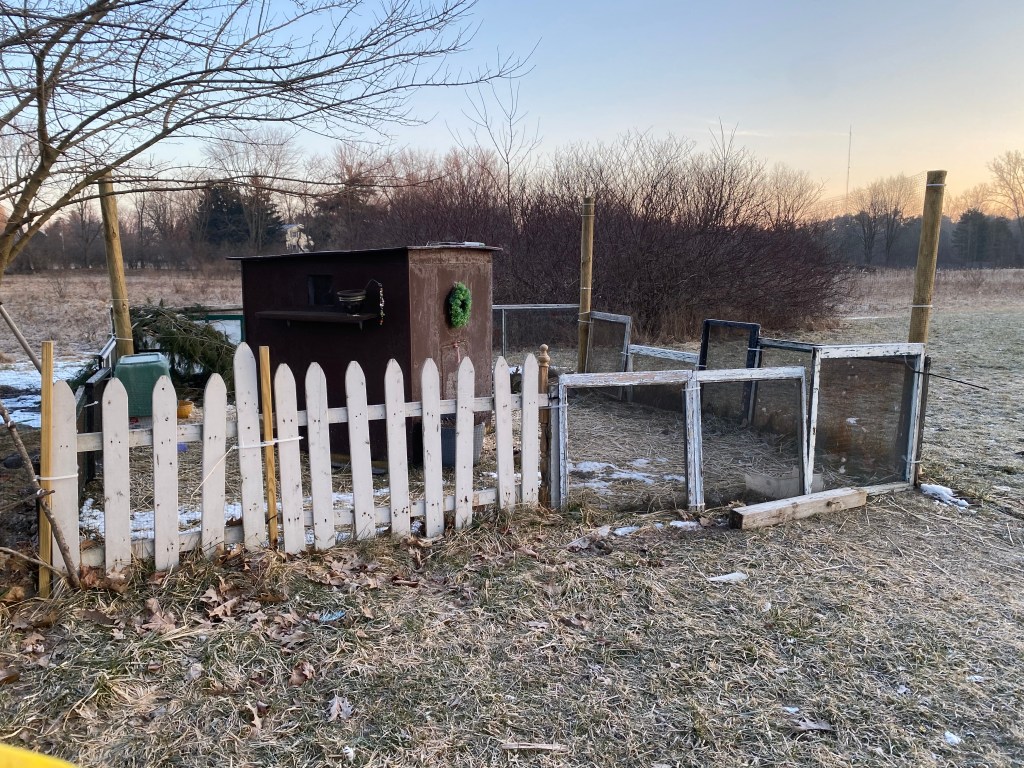
Ducks just a need a shed with a ramp (ducks can’t climb stairs).
A small, enclosed run also helps keep them off the pond at night. This does not need to be a high fence or a strong one for that matter. Ducks generally respect boundaries without being aggressive, unless they can fly.
If your ducks can fly, you will need a run with an enclosed top.
They sleep on ground level and lay their eggs on ground level, too. There is no need for a nesting box for them.
Their house needs to have good circulation, especially towards the roof. They are much wetter than chickens and mold, mildew easily grows in their houses.
Pine shavings works best with ducks.
Don’t overcomplicate the duck house, but do keep in mind that it needs to be cleaned often when making plans for it.
Training – Introduction to the Coop & Pond
At 8 weeks, you can finally ditch the baby duckling care stuff and put them outside full time.
Hopefully at this point, they have been introduced to the coop area a bit and have come to learn that you are their owners that give them food.
Ducks are very food motivated so this will help in the next coming months.
The ducks don’t need any training on how to swim, but they do need training on knowing how to get off the pond when told and come back to the coop for food and bedtime.
Ducks do take longer than chickens to train and don’t like change. They are very much creatures of habit, and sometimes changes makes them skittish and uncooperative.
The first couple weeks being outside full time will probably be frustrating. You will probably find they won’t come off the pond and they do whatever they want.
Ducks can sleep on the pond very well, though. If there is ever a night they simply won’t come back, then they will be fine (ask me how I know). But this should be done only in rare cases.
That said, they just need your patience and guidance to help them create habits. And believe me a small pen around their coop where they get dinner can help keep them off the pond at dinner time/bedtime.
I had to do a bread crumb trail of food, while shaking the food canister to get them to come back to their pen for bedtime, the first couple weeks outside. I even had to put food into their coop for them to go in at night!
Once they learned what the food canister sounded like, they learned that food comes after. Soon enough, I was able to just shake the canister and they came up off the pond and into their pen/coop area.
You can easily do a bell, or a certain calling too. We do “Duck Ducks”. No matter which you use be consistent and don’t change it on them!
I highly suggest only feeding them, both meals and snacks, in the same spot, preferably in their coop/pen area. This way you can easily lure them into the coop at any time of day with food in the future and the ducks get comfortable with the routine faster.
Training them to go into the coop at night will take the same patience and guidance. I often had to pick them up and put them in myself. After a while, they learn how to climb in and it’s not as frustrating.
Once they learn that they are safe and getting fed consistently, then the trust in the relationship will build and having them follow orders will be a breeze.
And then once they are comfortable with the property, you will see their daily routine form. It will be just about the same every day, and they become very predictable.
To keep them away from the neighbor’s yard, simply make sure their needs are met; water (hopefully your pond), consistent feed, and of course human interaction.


Feed
Ducks past 8-10 weeks old don’t need as much niacin anymore and can be switched to chicken feed.
We buy chicken feed with added calcium in it to eliminate the need for oyster shells. If you are not buying feed with added calcium, then add oyster shells just like chickens.
Ducks that are free ranged eat a lot less feed.
In fact, in the summer when the bounty is full, they barely eat feed. I have to be careful not to overfill their food bowls or it will lead to waste.
Ducks need wet feed. We give them their water and feed all in the same bowl.
Free ranged ducks on a pond, were just swimming all day so they don’t need a pool or a separate water bowl anymore once in the pen.
But they do need a bowl that isn’t easily tipped. Ducks like to climb into their food bowls and tip them over. They can easily eat it off the ground, however, it can lead to a messy pen.
Messy pens tend to attract wildlife like field rodents and other birds. Adding more poop and mess to clean up!

Eggs
Ducks start laying eggs around 6 months of age. Then it can take a couple of weeks to a month for them to be consistent on laying good, quality hard shelled eggs.
Don’t worry if you see soft shelled eggs, or the fact there’s all of a sudden 3-4 soft shelled eggs around. It does take their bodies a while to get used to laying one egg a day that has a hard shell.
But despite them starting later than chickens, they lay more consistently through the winter, and will lay eggs for about 5 years.
Plus, duck eggs are highly nutritious. So, your patience will be rewarded (duck egg nutrition explained here a bit)
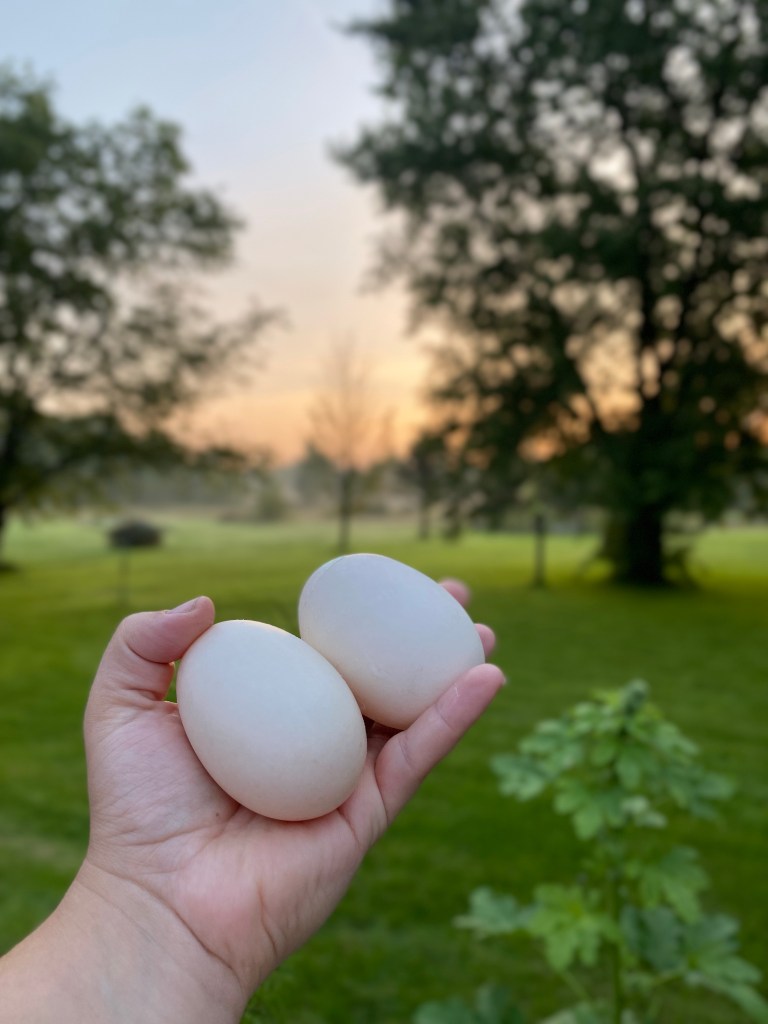
Ducks lay their eggs first thing in the morning, usually right before daybreak. Like mentioned earlier, they lay their eggs on ground level. And they usually choose one corner of the coop too.
Sometimes you will come across that the duck is trying to hold on to her eggs to lay a clutch; this can sometimes lead to her laying it in the middle of the day or at night. Which then leads to random nesting spots hiding on the property.
Having a pen can really help make sure the eggs land in the coop. If you are noticing that your ducks are trying to lay in a random nesting spots, then keeping them penned up for a few hours in the morning or bringing them in early for dinner can help.
Clean coop = Clean Eggs. Ducks are much cleaner than chickens to begin with. So, if you are getting dirty eggs, you probably have a dirty coop.
There are some exceptions of course; your ducks still need calcium like chickens for good shells, and they need to be in a loving environment to not be too stressed out to lay good eggs.
They also need a coop big enough for the flock. An overcrowded coop can lead to too much poop and not enough room for them to lay their eggs.
Besides that, ducks tend to choose one corner of the coop to lay their eggs. I always place an extra layer of bedding in that corner to make sure my eggs are clean.
Ducks also like to bury their eggs in the bedding, also. I have a tiny rake to help me dig through the bedding.

Behavior & Predators
Like mentioned above, ducks are predictable! Which is great for us, but not so great for predators.
Thankfully, they are very aware and alert of predators around, much more so than your laying hens.
They know when to go into predator mode, usually long before I realize there’s something flying or walking around.
Their response is to freeze. Since they know they can’t fly, they tend to freeze until the danger has passed. Sometimes you can even be calling them, and they won’t unfreeze until they know they are safe again.
Free ranged ducks are really good at finding their safe hiding spots on the property or retreating to their pond. I wouldn’t make any sort of man-made hiding spots for them, because they won’t bother with them.
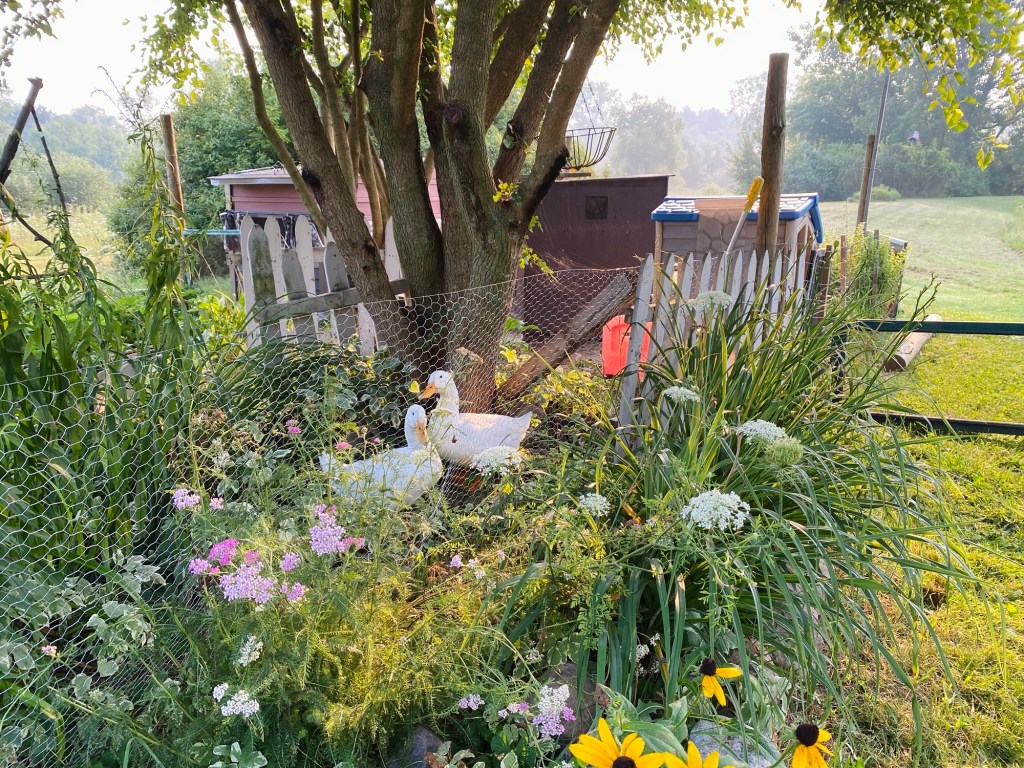
So long, as their low growing bushes or pine trees, you will notice they have their favorite spots to safely sleep or stay warm/cool under. Note, that they do not generally hang out in their coop or pen area unless they are being fed.
Having a male duck, a goose, or a livestock guardian dog can also help further protect them if that’s needed on your property.
Overall, ducks are generally friendly and approachable and docile (depending on the breed of course) but only if they were interreacted well when they were ducklings. My ducks don’t like to be held but they will willingly come up to you and see it you have food for them.
I don’t have any concerns about them being around my children, unlike my chickens and rooster.


Winter Care
Ducks don’t give a rat’s toot about snow or cold. They will happily waddle through it looking for their ponds and their favorite spots.
When it’s extremely cold, they do hunker down and lay low.
We have, a small outdoor hut made of pine boughs that help them keep off the wind during the really cold spells (wind chills of below 5). We have to keep them in their pen to make them use it though.
That said, they do not need a supplemental pool in the wintertime. If the pond is thawed, they can take care of themselves in it, but if its frozen over then they just have to deal with it being frozen over.
The only water they need is with their food in this case; enough water to clear their bills in.
Straw in the pen area can help keep from too much ice forming in their pen.
Ducks tend to flatten areas they walk around in, making it susceptible to icy surfaces. The straw is just enough roughage to help it from forming an ice rink in the pen.


That’s It!
Ducks, by far, are the favorites on the homestead. My kids adore just walking next to them and watching them swim on the pond, and if they can catch them, holding and petting them.
Their eggs are preferred for many recipes too, especially baking anything I want to shove in a extra protein and vitamins like waffles, pancakes, muffins, etc.
And the best part about having a pond is that they are less messy!
Their coop and their pen are the only pain points when it comes to cleaning duck poop. With a pond there are not stinky kiddie pools to be bothered with.
I hope this helps you get your ducks on your pond!
Enjoy!
-Chelsea, The Cottage Vegetable
- Seed Starting Set Up | Minimal, Organized, Indoors
- Reputable Canning Resources
- Garden Planning Tips
- Spiced Cranberry Sauce | Water bath canning
- Creamy Chicken & Potato Soup | Canned Chicken Recipe
The Cottage Vegetable website is an AI FREE zone! Everything is written and photographed by myself, Chelsea.


Use coupon code COTTAGEVEG10 for 10% off your purchase site wide at OLLE GARDENS
12-IN 1 Metal Raised bed in Barn Red, featured in my own personal garden

 The Cottage Vegetable
thank you for this!! We just bought ducks. They’ll get shipped Monday and we have a pond. So I’ve been trying to find people talking about having them free ranged. Thank you so much!
LikeLike
Oh, I am excited for you! If you have any questions, feel free to comment or email me. My ducks are still going strong free ranging, and we intend to free range them their entire lives. Good luck, and have fun!
LikeLike
where can I buy 6 to 8 weeks ducks
LikeLike
I would look around online for local farms who sell chickens. Usually, they will have a variety of farm birds to choose from including ducks. Hope this helps!
LikeLike
They can climb half height (from step to step) stairs. They do every night to nibble on the feed left out.
It’s weird because they’ve gone out into the pond when they were younger even with the fence up but I took it down today to remove more of the stupid water weeds that blow towards our end and now they are acting like they’ve never been on that side and were not able to get there this entire time.
They’re my daughter’s ducks and she cut their wings once when they were little but hadn’t since, that was years ago. The Peking shouldn’t be able to fly according to what I’ve read. The Campbell duck should and I thought she was going to once during a strong wind cause she was flapping but she never got off the ground.
They know their names as well as ‘Ladies’. They sleep in the middle of the yard close to my house.
I’ve gone out twice and seen a barred owl in the only tree in our yard, which is where the well fed adult ducks sleep, should I worry?
LikeLike
I personally would give them protection from predators, especially at night. Even if a predator can’t eat or pick them up themselves, they can still get injured and pass away later from injuries. I would allow your ducks to also make the judgement of going into the pond. There are plenty of underwater predators that travel, like snapping turtles, so I always trust my ducks to do what’s right for them. And, yes, our Pekins can climb up stairs, especially the boys and even fly a short distance. I hope this helps and thank you for writing!
LikeLike